How to Choose a Web Design Agency (and Spot Red Flags)

Choosing a web design agency is about more than finding a team that can create a polished website.
As our co-founder Michelle Pederson explains, “Most people choosing a web design agency aren't really shopping for a prettier website. They're trying to reduce risk on a decision that feels high-stakes and difficult to evaluate."
Part of the challenge is that many agencies look similar on the surface. Most have portfolios, case studies, and promises of great results, which can make it difficult to know who will actually be the right fit for your business.
Whether the goal is generating demo requests, driving bookings, or building brand recognition with prospective customers, companies want confidence that their website will support real business goals. This isn’t an unreasonable expectation. Research has found that a well-designed user experience can increase conversion rates by up to 400% and influence customer trust, onboarding, and long-term adoption.
If you're evaluating web design agencies, here are six things worth paying attention to—along with a few red flags that may signal a poor fit.
Key Takeaways
- A strong portfolio matters, but it doesn't tell you whether an agency understands your business, audience, or goals.
- The best web design agencies connect design decisions to business outcomes, not just aesthetics.
- A clear process helps reduce delays, misalignment, and unexpected surprises throughout a project.
- Pricing differences often reflect differences in strategy, collaboration, and implementation support.
- Strong communication is one of the most important indicators of a successful agency partnership.
- The right design partner should help clarify ideas and solve problems, not simply execute instructions.
1. Choose an Agency That Understands Your Business
An impressive portfolio can tell you what an agency has created. But it doesn't necessarily tell you whether they understand your industry, customers, or business goals.
The more important question is whether the team can understand your product, audience, and the challenges behind the work itself. For B2B SaaS companies, that means understanding complex workflows, technical buyers, and onboarding experiences that require more than surface-level design decisions.
One of the easiest ways to evaluate this is by paying attention to the questions an agency asks during early conversations. This context can shape the entire working relationship—and the resulting website.
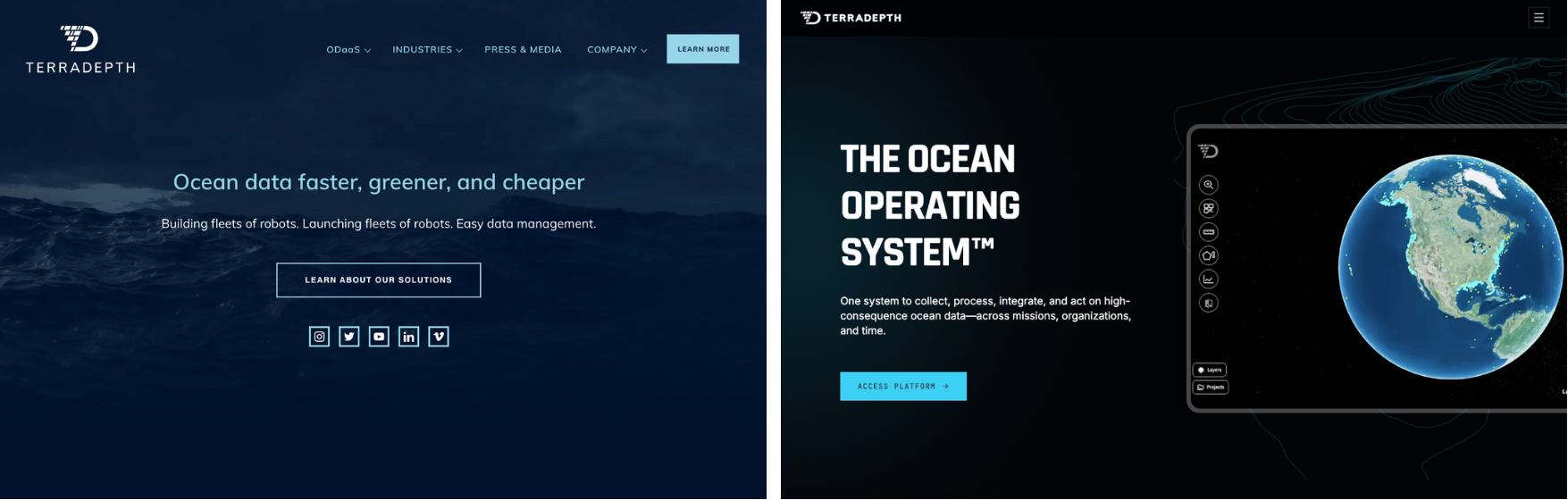
We saw this firsthand at Klimt & Design while working with Terradepth, an ocean intelligence company serving enterprise, government, and defense organizations. Before partnering with us to redesign its website, the company had worked with vendors that struggled to navigate the complexity of the product and industry.
As a result, the same context had to be explained repeatedly. Some projects required as many as 15 to 20 rounds of revisions, leading to longer timelines and additional costs. After becoming more familiar with Terradepth’s products, workflows, and positioning, Klimt was able to reduce that process to roughly two or three rounds per project.
Watch Out For These Red Flags:
- The agency spends more time discussing visual trends than business goals.
- The agency asks very few questions about your customers, industry, or competitors.
- The agency relies heavily on generic templates or assumptions.
- The agency struggles to explain how they learn about a client's business before designing.
2. Look for Proof That the Website Will Deliver Results
When reviewing agencies, look beyond the visuals. They should be able to explain the challenges they were solving, the goals the website was designed to support, and the reasoning behind key decisions.
Just as importantly, they should be able to connect those decisions to business impact, whether that's improving lead quality, increasing conversions, or helping visitors find the information they need more easily.
When a regional attractions and hospitality business approached Klimt, it wasn’t looking for a more attractive website. The company already had strong marketing traffic coming from multiple channels, but the issue was that visitors weren’t converting into bookings.
The business needed a website that turned more of that interest into bookings, so our conversations focused on creating an experience that better guided visitors toward taking action.
This is why it's important to ask how a design partner approaches messaging, user experience, conversion paths, and customer journeys. Those elements can have just as much impact as visual design.
Watch Out For These Red Flags:
- Case studies focus only on visuals.
- The agency can't explain why specific design decisions were made.
- The agency struggles to explain the strategy behind their work.
3. Ask About Their Design Process
Every web design agency has a process, but not every process is equally clear.
Before starting a project, you should understand how your potential partner approaches discovery, feedback, revisions, approvals, and communication. A well-defined process helps prevent confusion and delays later on.
From our experience at Klimt & Design, one of the most common concerns prospects raise is whether an agency can realistically deliver on its proposed timeline. Many businesses begin website projects with deadlines tied to product launches, marketing campaigns, fundraising efforts, or growth initiatives.
Rather than finding a design partner that simply moves quickly, you need to find one that can provide a timeline and explain what will be required to meet it. In most cases, the process should include some combination of discovery, stakeholder input, wireframing, feedback, and collaboration with developers or internal teams.
This doesn’t mean every project needs months of workshops or exhaustive research. For startups and smaller teams, speed and flexibility are often just as important as depth. Still, even fast-moving projects benefit from clear thinking upfront, especially when usability and messaging directly affect conversion or onboarding.
Landing pages are a good example of this. Small changes in hierarchy, clarity, or navigation can have a noticeable impact on engagement and lead generation.
Several companies that have worked with Klimt had deadlines connected to launches or outreach efforts. In those situations, the most productive conversations were centered on identifying priorities, understanding constraints, and building a realistic plan—not moving as fast as possible.
Watch Out For These Red Flags:
- The agency promises aggressive timelines before understanding the scope.
- The process feels vague or poorly defined.
- Revision expectations aren't clearly explained.
- The agency can't tell you what could affect the timeline.
4. Understand What's Included in the Price
Website pricing can vary significantly from one agency to another. Though it may be tempting to compare proposals based on cost alone, you should ask what you’re actually getting for that investment.
Some agencies include discovery, content strategy, copywriting support, development, training, and post-launch assistance, while others price those services separately.
Transparency matters here. A good agency should be able to explain:
- What deliverables are included
- How revisions are handled
- How timelines affect pricing
- What could cause the scope to expand later on
During one website project that Klimt handled, the number of pages expanded beyond the original estimate as the client's needs evolved. Because expectations around scope and pricing had been discussed upfront, the team was able to adjust the project through transparent per-page rates and template reuse—without creating surprises around budget.
It’s also helpful to ask how the agency approaches prioritization. For companies working within tighter budgets or timelines, the most effective partners are usually the ones that can identify which parts of the experience will have the biggest impact first instead of treating every feature or deliverable as equally important.
Ultimately, the goal is to find a level of support that aligns with your team, product, and budget—not just the lowest price.
Watch Out For These Red Flags:
- Pricing feels vague or difficult to understand.
- Deliverables aren't clearly defined.
- Revision policies are unclear.
- The agency avoids discussing how scope changes affect cost or timelines.
5. Prioritize Clear Communication
Even exceptional design work can become frustrating if the working relationship itself feels disorganized or unclear.
Because most web design projects involve multiple rounds of feedback, communication style affects the final outcome more than many companies expect. Misalignment early in the process can easily lead to unnecessary revisions, delays, or confusion later on.
Before choosing an agency, it’s worth clarifying:
- Who will actually be involved in the project
- How feedback is shared
- How often communication happens
- How visible the work will be throughout the process
You might see agencies that handle feedback through smaller iterative reviews, while others prefer more formal milestone presentations before gathering input. Every agency structures collaboration a little differently, so it’s important to align expectations from the beginning.
Pay attention to how an agency communicates before the project even begins. Consider:
- Are they responsive?
- Do they answer questions clearly?
- Do they set expectations around timelines and next steps?
The sales process provides a preview of what the working relationship will feel like later. If communication feels disorganized, rushed, or unclear before a contract is signed, those challenges rarely disappear.
Communication becomes even more important when developers, marketers, and multiple stakeholders become involved. A good design partner should be comfortable working across disciplines rather than treating design as something separate from product, engineering, or business conversations.
Watch Out For These Red Flags:
- The agency is slow to respond.
- Questions go unanswered or receive vague responses.
- Points of contact are unclear.
- Communication expectations are never discussed.
6. Look for a Strategic Partner, Not Just an Executor
Not every business begins a website project with a clear roadmap.
Some companies are still refining their messaging. Others are entering a new market, launching a new offering, or trying to better articulate what makes them different.
As one prospective client told Klimt, "We just don't know who we are yet."
The right agency should be able to help navigate that uncertainty rather than simply waiting for perfect direction.
For example, a healthcare organization reached out to us before it had finalized its name, visual identity, or positioning. The project required strategic guidance to help define the brand from the ground up before our team could execute on design.
This is where experience can make a meaningful difference. A strong web design partner should be able to ask thoughtful questions that challenge assumptions and clarify ideas when needed.
Klimt's work with SketchPro, an AI-powered interior and architectural visualization platform, reflects this approach. The project involved more than designing a landing page. The challenge was helping prospective users quickly understand how the platform worked and why it was valuable.
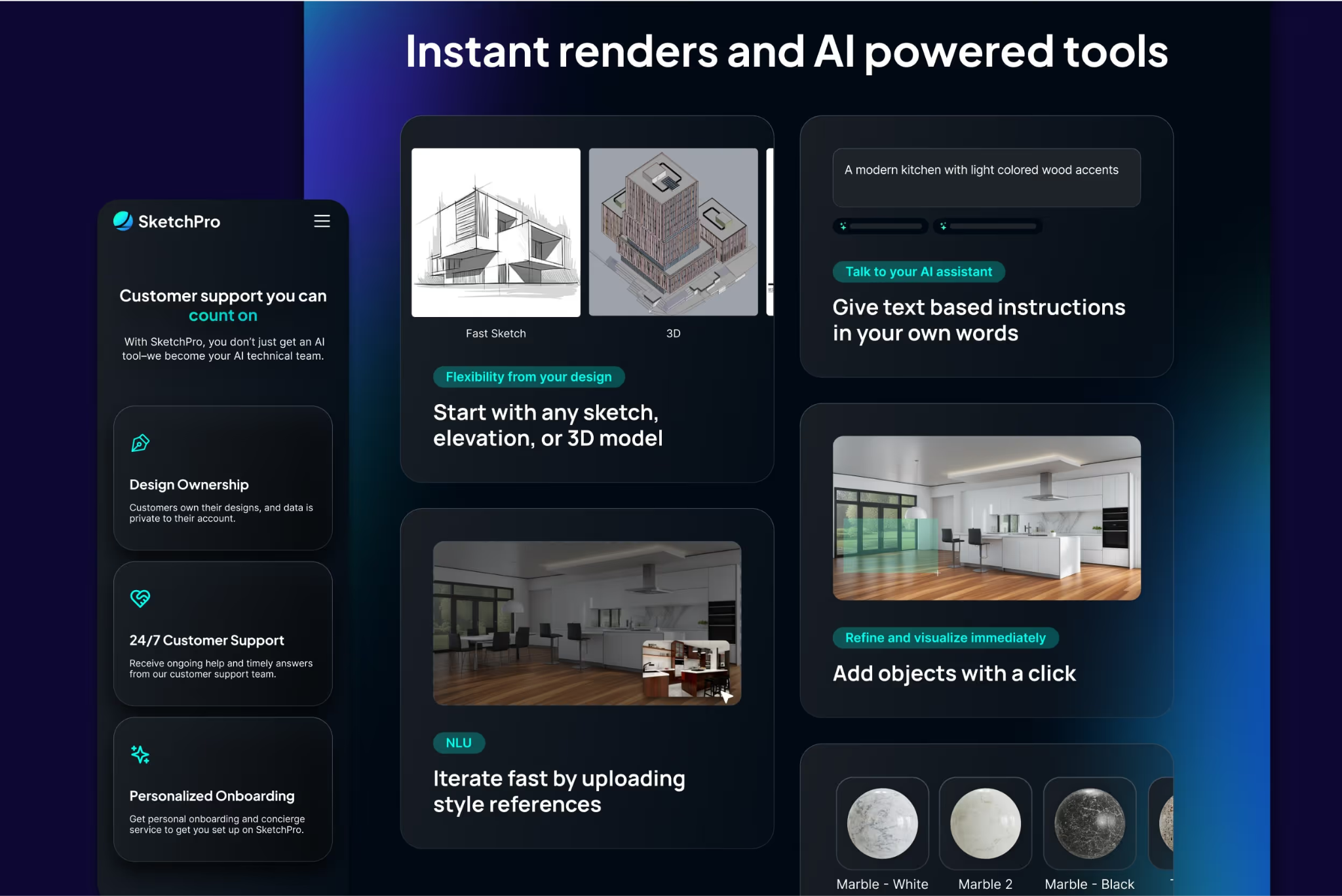
To support that goal, Klimt developed a brand style guide, motion graphics inspired by the product interface, and a Webflow landing page designed to make the platform's workflow easier to understand at a glance. Product renders and demonstrations remained the focal point throughout the experience, while supporting visuals reinforced the platform's flexibility without overwhelming the page.
Work like this comes down to making complex ideas easier to understand. Design plays a role, but so do messaging, prioritization, and a clear understanding of the audience.
Watch Out For These Red Flags:
- The agency only executes what they're told without offering recommendations.
- The agency rarely asks questions about positioning, messaging, or business goals.
- Discovery feels like a formality rather than a meaningful part of the process.
- The agency avoids challenging assumptions or providing strategic input.
Frequently Asked Questions
How much does it cost to hire a web design agency?
Website pricing varies based on the size and complexity of the project. Factors such as strategy, content support, custom development, integrations, and post-launch services can all affect the final cost. When comparing proposals, focus on what's included rather than price alone.
What should I look for in a web design portfolio?
Look beyond the visuals. Strong portfolios should demonstrate how the agency approached business goals, user experience, messaging, and problem-solving. The best case studies explain the thinking behind the work, not just the final design.
How long does a website project take?
Timelines depend on the project's scope, number of stakeholders, content requirements, and technical complexity. Smaller website projects may take 3-4 weeks, whereas larger product or platform redesigns can take 8-12 weeks or longer. You should communicate the urgency of your project and desired timeline to understand what is realistic for an agency.
When should a company hire a web design agency?
Many companies bring in a web design agency when:
- launching a new product
- redesigning an outdated website
- repositioning their brand
- entering a new market
- improving how they communicate with prospective customers online
It especially makes sense to hire an agency if your team lacks the time and/or expertise to tackle these challenges.
Should I choose a freelancer, in-house designer, or agency?
The right option between choosing a freelance designer, agency, or hiring in-house depends on your goals, budget, and internal resources. Freelancers often work well for smaller, clearly defined projects. In-house designers can provide ongoing support for day-to-day needs. Agencies can be a good fit when a project requires multiple disciplines, strategic guidance, or a broader range of expertise.
Find the Right Long-Term Partner
The best web design agency for you isn’t necessarily the one with the flashiest portfolio, the lowest price, or the fastest timeline. You should find a partner that understands your business and can help you achieve your goals while communicating clearly at every step of the way.
At Klimt & Design, we've found that the strongest websites come from meaningful collaboration. The more familiar we become with a client's business, goals, and customers, the better the work tends to be. This is one of the reasons why many of our clients return to us for additional projects as they grow and refer us to other businesses.
If you're evaluating web design agencies and want a partner that takes the time to understand your business, get in touch to start a conversation.
Sign up for our newsletter
Related stories

The First Ask Is Not Always the Real Need
When a project’s needs change, our role is to help connect the dots.

Rebrand vs. Brand Refresh: How to Decide What Your Business Needs
A rebrand isn’t the same as a brand refresh. Both can help your business evolve, but they differ in scope.