The Confidence Bank: How We Think About Client Trust

In The 7 Habits of Highly Effective People, Stephen Covey introduces the concept of the "emotional bank account." The idea is that trust works much like a bank balance: our actions either make deposits or withdrawals, and the balance determines how much goodwill exists in a relationship.
I've found this to be a useful way of thinking about client relationships at Klimt & Design.
At face value, it feels like doing good work should be enough to build trust. Of course, the quality of the work matters. But I've found that clients develop confidence in us through a much wider set of interactions: how we communicate, whether we follow through on commitments, and what we do when something goes wrong.
A referral can give us a head start since some trust carries over from the person who recommended us, but we still need to earn most of that trust ourselves.
Making deposits before you need them

I think of a deposit as a small moment during a project when a client sees that we're paying attention and acting in their interest. For example:
- Backing our decisions with thoughtful reasoning. When a client asks why we made a particular design decision, we explain the thinking behind it rather than immediately offering to change it. Each time we can provide a thoughtful rationale, we build a little more trust. We're also clear about which decisions are guided by established design principles or research, and where there's room for personal preference.
- Showing that we've listened. We come to meetings prepared with updates on everything discussed previously, honor client preferences without needing reminders, and follow through on our commitments. If we say we'll have a recommendation by Thursday, we deliver it on Thursday.
- Making collaboration easier. We might edit a design live during a call to reach alignment faster, or share rough work early so clients have something concrete to react to.
- Helping our clients succeed internally. If our primary contact needs to present our work to their leadership team, we offer talking points or a rehearsal call to help them prepare.
- Looking out for their interests. If a client asks whether they need an additional service or deliverable, we'll tell them when we don't think it's necessary, even if it means passing up additional revenue.
None of these actions is particularly remarkable on its own. But I've noticed that over time, clients become more comfortable trusting our recommendations and giving us the freedom to make decisions independently, knowing we'll involve them when their input is needed.
What happens when we get something wrong
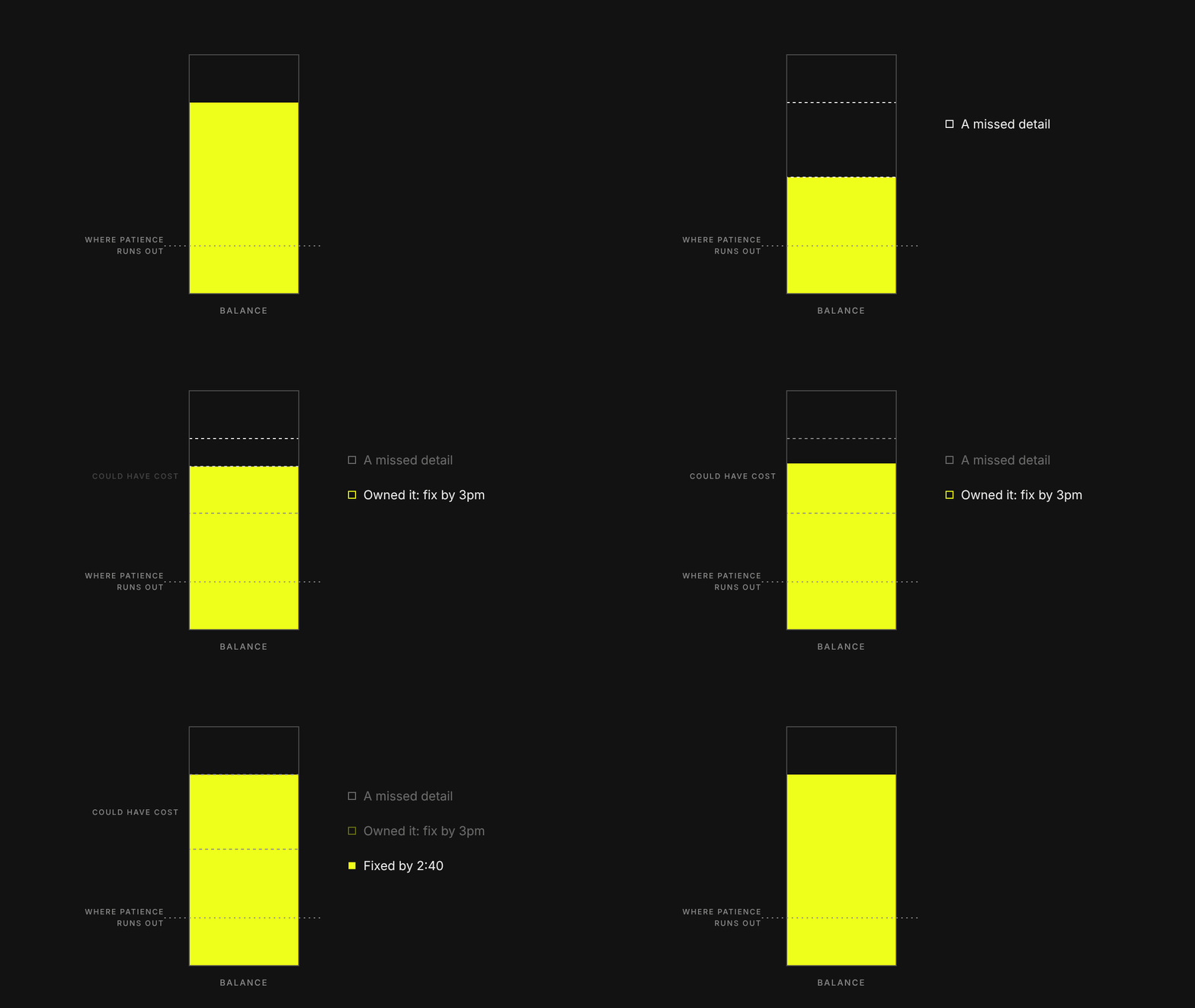
No agency, including ours, gets everything right. Sometimes work comes back weaker than it should. Or, a deadline needs to move because something took longer than expected. These are withdrawals from the confidence bank.
The size of that withdrawal depends on two things:
- how much trust we've already built, and
- how we respond when something goes wrong.
A client who’s consistently had positive experiences with us is generally more willing to be patient when we make a mistake. And when they point out something we've gotten wrong, we take responsibility. We say without qualifications or excuses:
"You're right. That was our mistake. We'll review everything and make sure we fix the issue."
We also communicate when they can expect a resolution and follow through on that commitment.
A mistake may reduce a client's confidence in a particular piece of work, but taking ownership of that mistake can actually increase their trust in us as a partner. They don't have to argue with us, chase down an explanation, or wonder whether we'll acknowledge the problem. They know we'll take it seriously and do something about it.
Building up a reserve of trust

I don't think it's realistic to expect any client relationship to be free of withdrawals. Projects involve people, competing priorities, and decisions made with incomplete information. Even very good teams occasionally need more time, make the wrong call, or fall short of their own standards.
The goal is to build enough confidence that these moments don't call the entire relationship into question. At Klimt, I've found that the small, unremarkable decisions we make throughout a project often contribute more to that balance than any single impressive deliverable.
A version of this post originally appeared in the Klimt & Design newsletter. Sign up to get similar insights delivered to your inbox.
Sign up for our newsletter
Related stories

The First Ask Is Not Always the Real Need
When a project’s needs change, our role is to help connect the dots.

Rebrand vs. Brand Refresh: How to Decide What Your Business Needs
A rebrand isn’t the same as a brand refresh. Both can help your business evolve, but they differ in scope.